Making music on your TV
From the mid 90s to the early 2000s, video game consoles began to sprout non-game titles that were intended as an alternative to personal computer software. It was a different time: computers were a luxury item, but almost everyone had a TV. CD-ROMs held more data than most people could feasibly download. At one point, Sega’s strategy for the Dreamcast was to promote it as users' first introduction to dial-up Internet.
As a child, I was briefly introduced to the program Music 2000 ("MTV Music Generator" in the US) for the PlayStation, since it came free with a demo CD attached to the front of a magazine. I had no idea what I was doing with it, but the concept of being able to make electronic music on my PlayStation fascinated me.
As I got older and developed a keen interest in electronic music, I started hearing persistent rumours that some "bedroom producers" responsible for the UK’s jungle, garage, and grime scenes got their start producing beats on a PlayStation, and the memories of that demo disc with Music 2000 came flooding back. What a great concept. Digital Audio Workstations were high-end software for professionals. A way to make music by arranging samples from a CD inserted into your cheap home console was a revelation.
Techno Motor on the Saturn
While the Sega Saturn was very niche in the Western world, in Japan it enjoyed success with popular titles such as Virtua Fighter, Sakura Wars, Far East of Eden: The Apocalypse IV, and Devil Summoner.
That brings us to Techno Motor. It was released in 1998, a good 6 months before Codemasters' Music series for PlayStation, exclusively in Japan. Users described it as "worth buying a Saturn for". Even by Saturn standards it’s virtually unknown in the West - but here’s the key thing, its interface is in English.
Usage in practice
Let’s make a very simple choon.
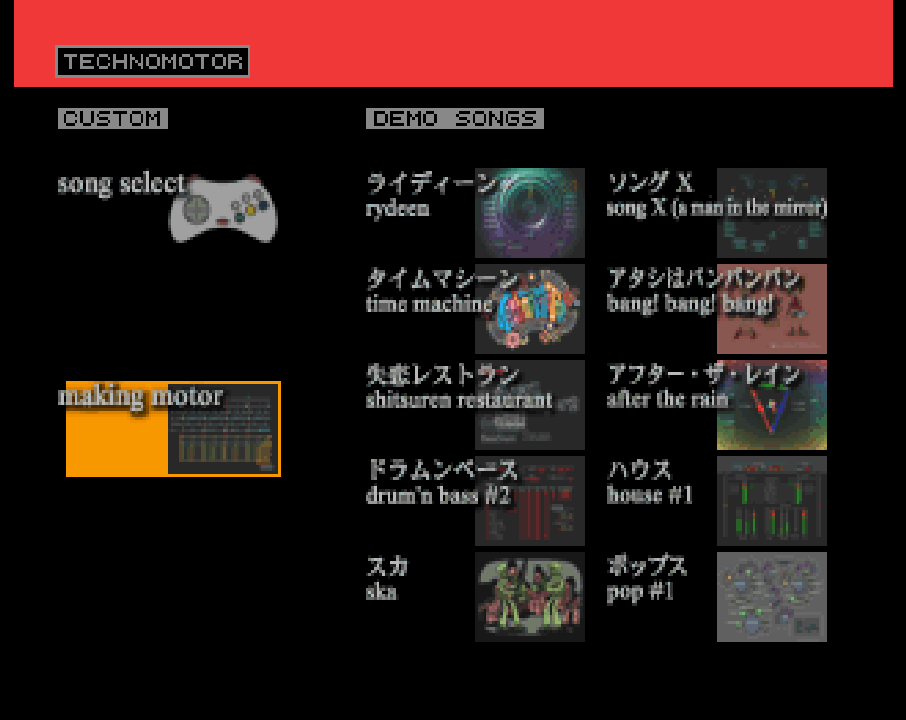
The main interface allows us to load songs we’ve previously made for playing, and even has some tooling for live improv over your songs. We’re not interested in that right now, so let’s select "making motor".
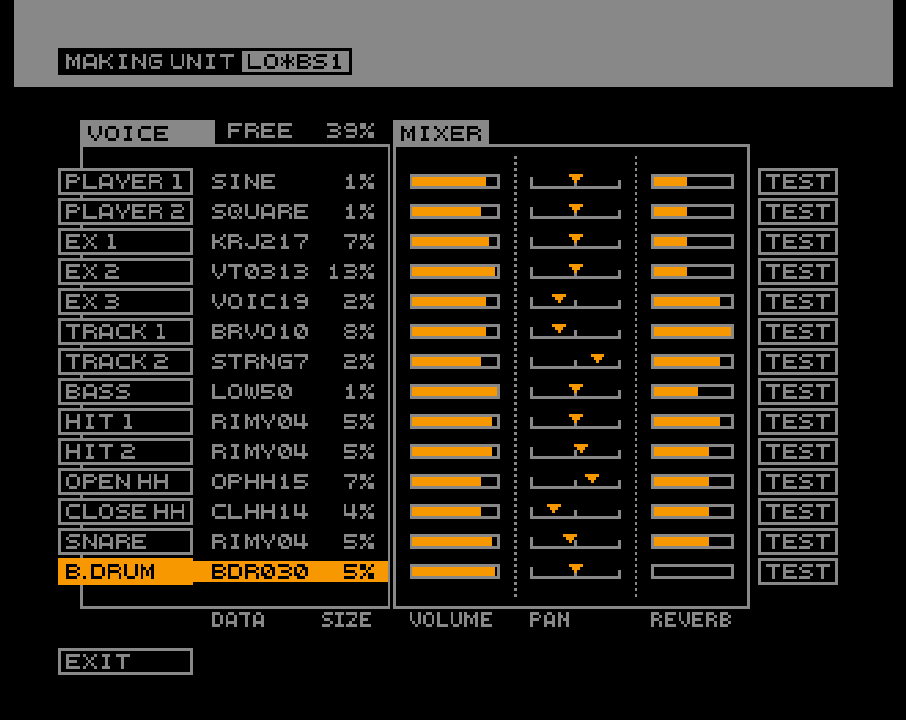
A "unit" in Techno Motor is the basis of everything. Something like a soundfont, you assign a sample to each instrument type. The unit editor doubles as a mixer where the volume and stereo panning of each instrument can be controlled - it also has a handy reverb effect. The Techno Motor CD has a fine collection of all the basic samples you’d need for making late 90s electronica choons, along with plenty of example units/patterns/songs to load.
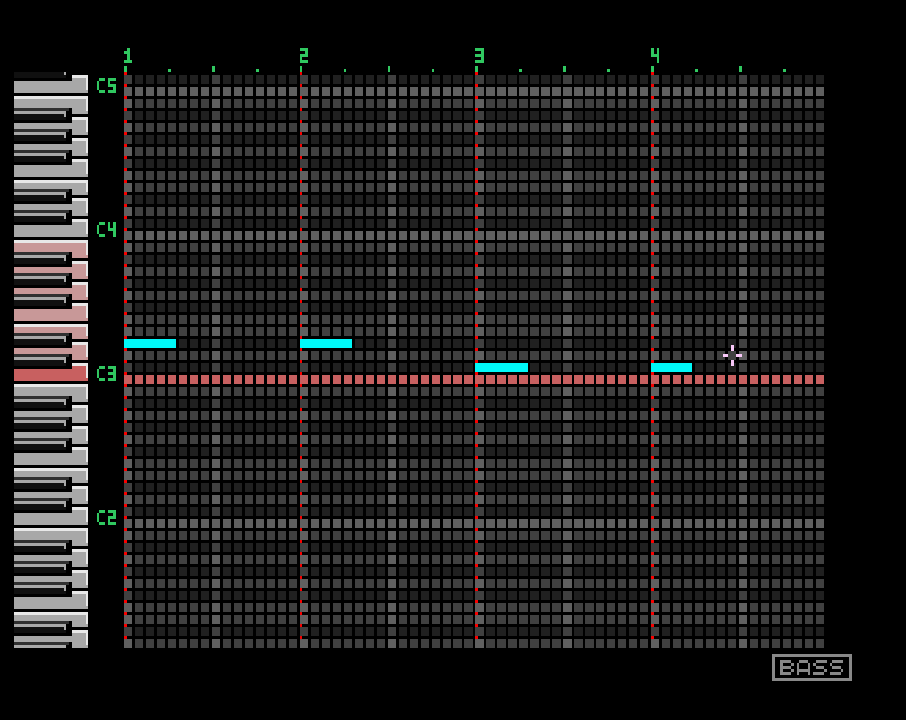
Now, the pattern editor. Here is a very simple bassline played out in the piano roll. Simply done by holding a button on the controller, and then using the d-pad. Everything from oldschool trackers to Mario Paint Music Maker and modern professional DAWs have interfaces that look very similar. You place notes. Piano playing ability not required.
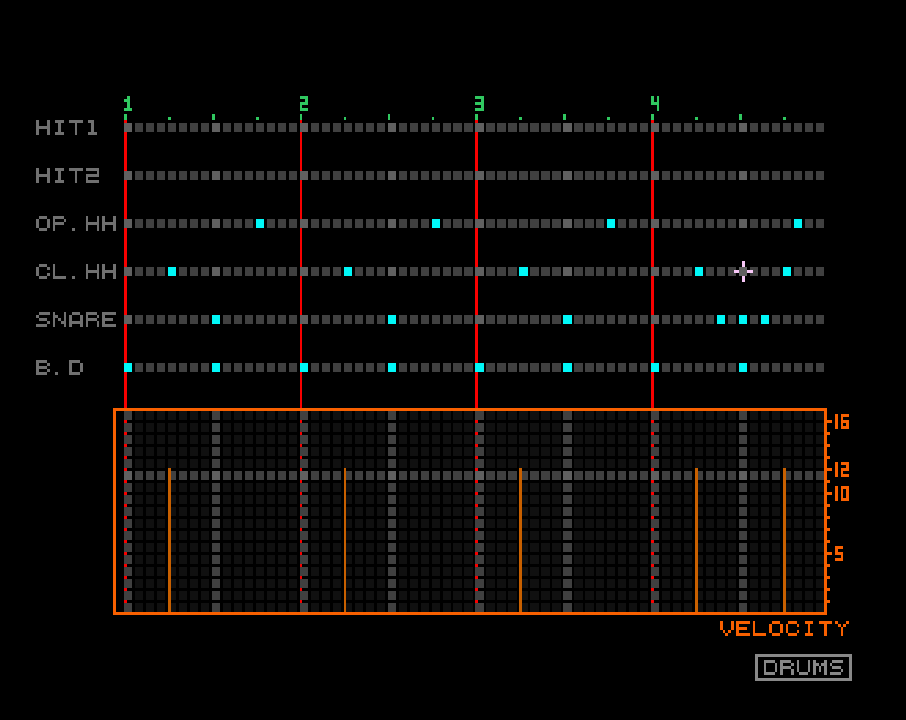
A drum sequencer (should be very familiar to anyone who’s used FL Studio) allows us to place hits on our drumkit, and save it as a pattern. Holding the up and down buttons on the pad while placing a hit allows velocity (the strength of the hit) to be controlled. Pictured above is a fairly simple four-to-the-floor style housey pattern.
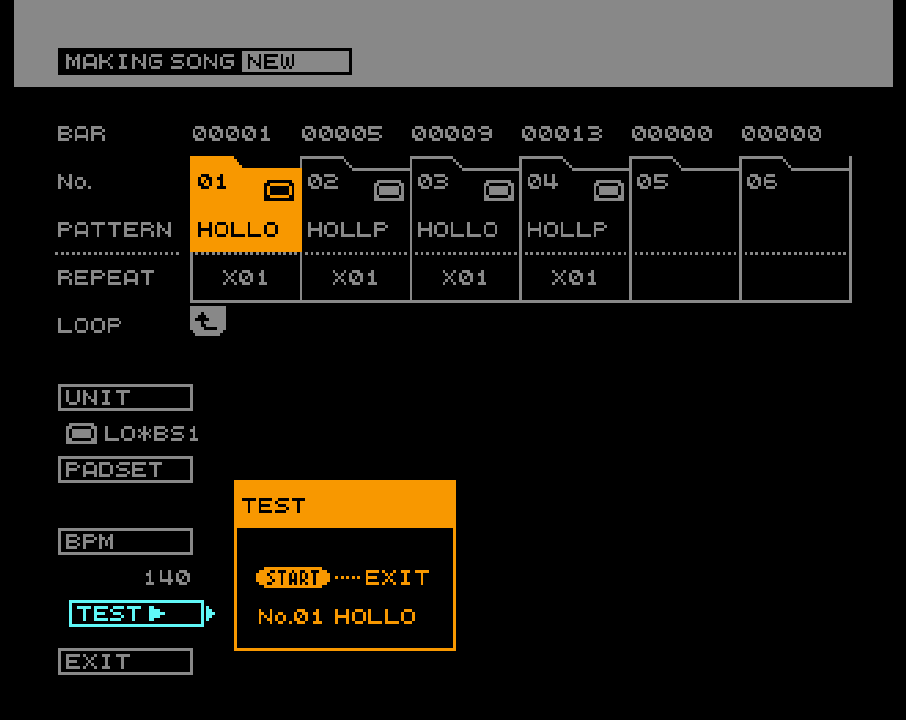
As Pulse X teaches us, two patterns are enough to make a song. Using the "song editor", we arrange our patterns "HOLLO" (just bass & drums) and "HOLLOP" (bass, drums, and weird samples) together in a loop, set our preferred tempo, and we’re sorted. Bass music, in less than 10 minutes.
With modern internet-connected machines becoming ever more sources of stress and distraction, many people are pining for simplicity. Perhaps it’s time to bring back beats made on mid-90s CDROM-based game consoles. Besides, think of the flexibility packed into this one CD. Screw those cheap Casio keyboards - in music class they should have sat us down in front of this!
Screenshots were taken with the Saturn emulator Mednafen, since I can’t capture colour video from my Saturn. This blog post was written by a human.